
Space is one of the few themes a kid will fixate on for years. The astronaut phase usually starts around age 4 and runs deep until 8 or 9. It feeds straight into early STEM interest, and a good personalised space book is one of the better ways to keep the obsession productive. Australian search volume for “personalised space book” sits around 30 a month (DataForSEO, May 2026), small but high-intent: the parents searching this already know what they want.
Most lists for this keyword point at the same five non-fiction picture books. They’re fine, but they miss the obvious upgrade: the book where your kid is the astronaut. We make those at Paper Lake, so this guide is honest about where personalised wins and where a classic non-fiction title still does the job.
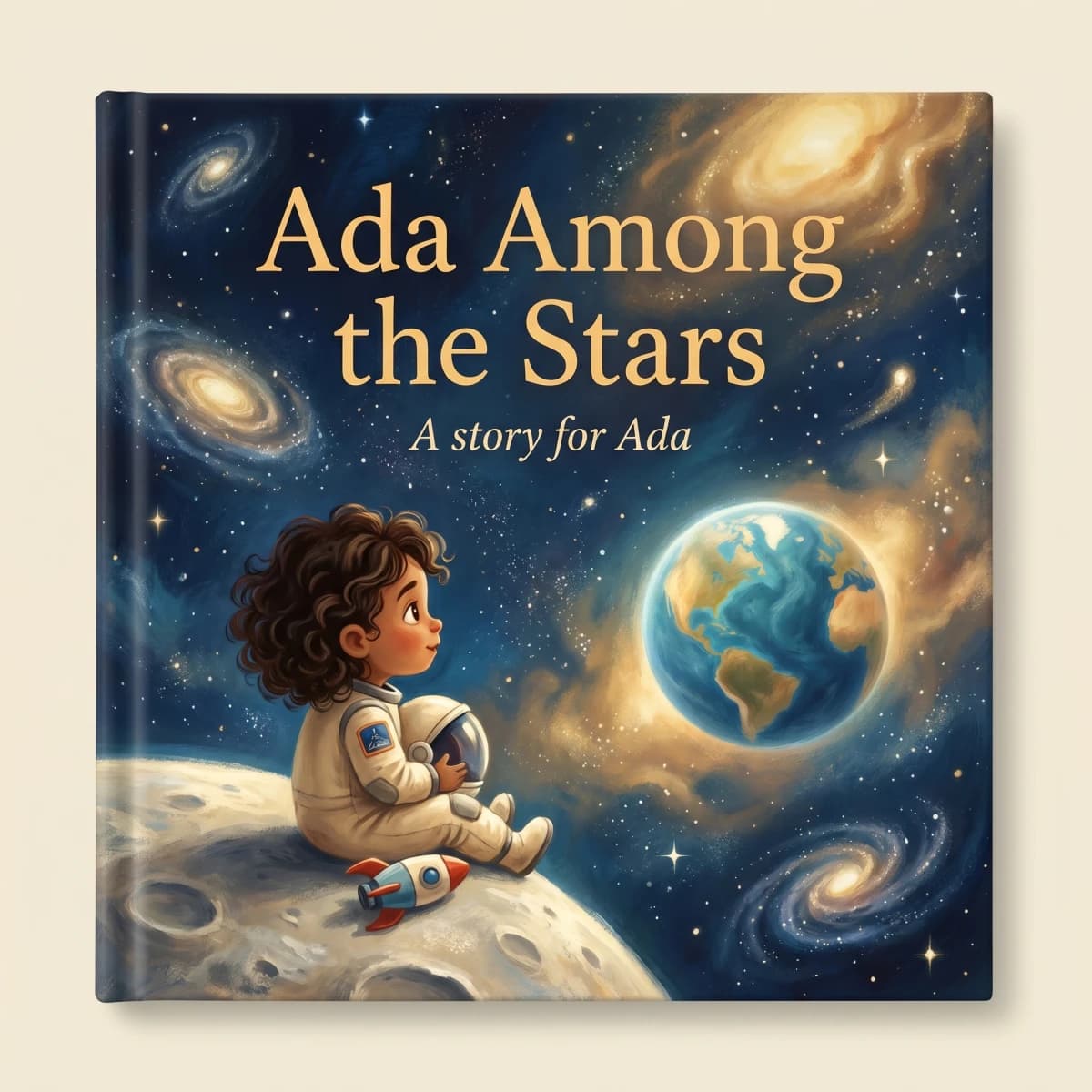
Why space-obsessed kids respond to personalised stories
The astronaut phase isn’t just costume play. It’s usually the first time a kid grasps that the world is part of something much bigger, and they get curious in a way that sticks. A picture of Jupiter is interesting. A story where they fly past Jupiter, count its moons, and wave at the Great Red Spot is the version they ask for at bedtime for the next month.
Personalised storytelling lands harder for these kids for two reasons. First, the astronaut character is no longer abstract. It’s them. Their face, their name, their voice in the story. That makes the emotional engagement deeper than reading about a fictional kid. Second, the astronaut role is one of the few children's-book heroes that maps cleanly onto a real adult job. A child who sees themselves doing astronaut work in a book starts to picture themselves doing astronaut work in real life.
The behavioural science here is well established for picture books broadly: shared reading where children identify with the protagonist produces stronger comprehension, recall, and engagement than reading about distant characters (Scholastic, research foundation on personalised reading). Space books are one of the categories where that lift is most visible because the subject already grips the kid.
What makes a great personalised space book
Not every book in this category does the work. The good ones share four things; the weaker ones cut corners on at least two of them.
1. Real planets in the right order
Mercury, Venus, Earth, Mars, Jupiter, Saturn, Uranus, Neptune. A book that gets the order wrong, mixes in fictional planets, or skips planets for art reasons is teaching a kid something they’ll have to unlearn. Pluto is a bonus mention as a dwarf planet (it was reclassified in 2006), and the best books say so honestly.
2. An astronaut character who actually looks like the child
Template services give you a generic astronaut with the child’s name printed on the suit. That’s a name swap, not a personalised book. The version that lands is one where the astronaut on every page has the child’s actual face: hair colour, skin tone, glasses if they wear them, the works. From a single photo this is straightforward with current illustration tooling.
3. Age-appropriate science
The science should be accurate but not overwhelming. For a 4-year-old, “Saturn has rings made of ice” is exactly enough. For a 7-year-old, “Saturn’s rings are mostly water ice and rock, and they’re only about 10 metres thick” is closer to right. A great book scales the depth to age without dumbing it down.
4. A real story, not a tour
The weakest space books read like a checklist of planets. The kid lands, looks around, leaves. Better books give the astronaut a problem to solve (a comet to chase, a friend to find, a signal to decode) so the planets become settings inside a story rather than stops on a guided tour.
How Paper Lake creates the space version
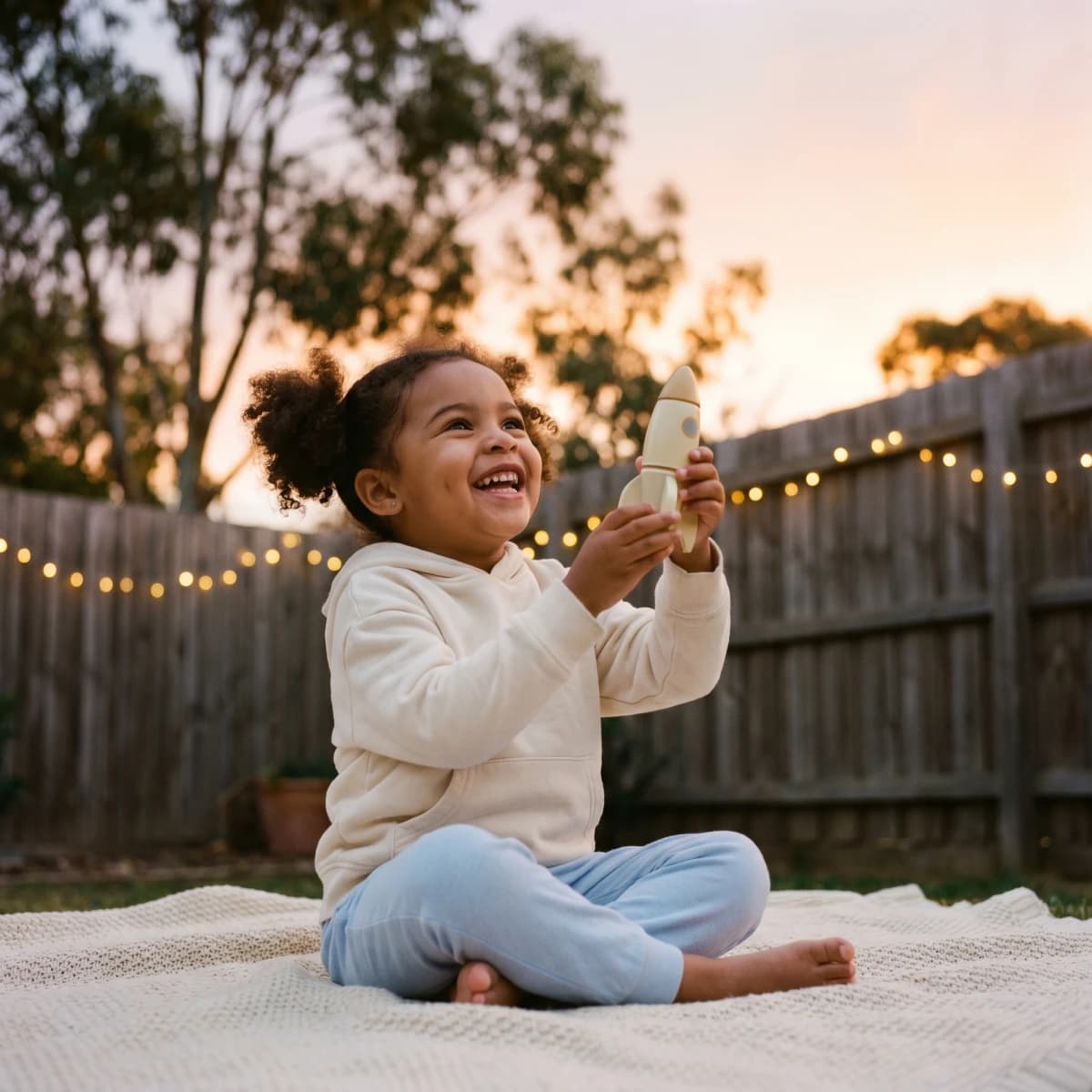
Their photo
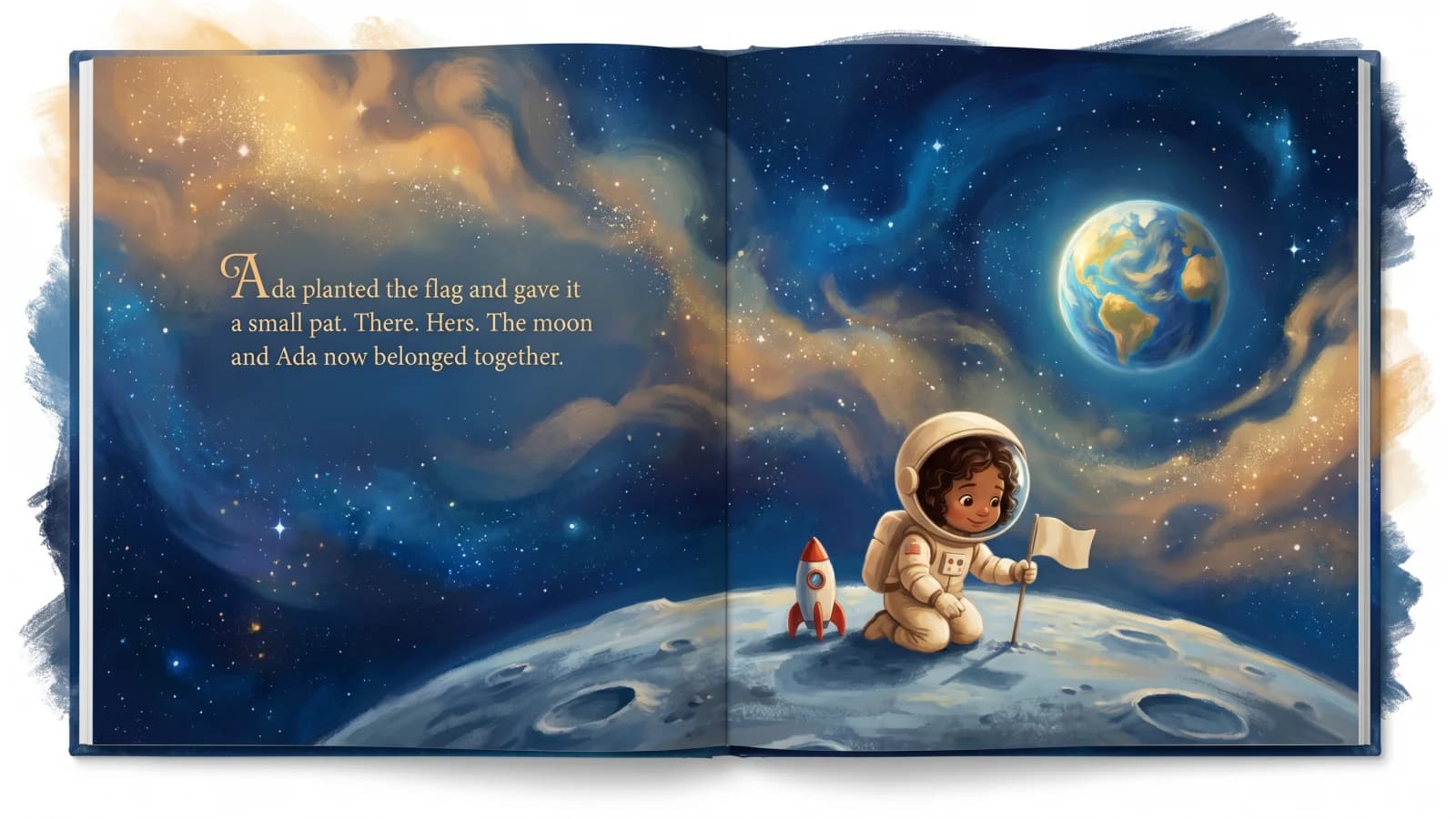
The order flow at Paper Laketakes about five minutes. You upload one clear photo of the kid, pick an art style (Pixar-like is the most popular for space), and choose adventure as the theme with a space brief. The story is written from scratch around the kid: their name, age, a sibling or pet if you mention one, and the astronaut adventure they’re going on. Every illustration is drawn so the astronaut on the page is recognisably the child in the photo.
On the science side, the books name the eight planets in the right order, hit the obvious facts (Jupiter is the biggest, Saturn has rings, Mars is red, Earth is the only one with life so far), and stay age-appropriate. You can flag things in the brief: “he loves Saturn”, “she wants to find aliens but be friendly with them”, “include a robot dog called Rocket”.
Three editions: paperback at $69, hardcover at $89, and a gift edition with a slipcase at $119. All three include the same fully custom story and illustrations. Free shipping across Australia. Printed in Australia. Delivery in 7 to 10 business days. Preview before printing if you want to tweak the story or the art.
| Edition | Price (AUD) | Format | Best for |
|---|---|---|---|
| Paperback | $69 | Soft cover, full colour | Casual gifts, younger siblings, books that get carried everywhere |
| Hardcover | $89 | Hard cover, lay-flat binding | Birthday and Christmas gifts, the everyday keeper |
| Gift Edition | $119 | Hardcover with slipcase and dedication page | Christening, milestone gift, grandparents’ pick |
- Price (AUD)
- $69
- Format
- Soft cover, full colour
- Best for
- Casual gifts, younger siblings, books that get carried everywhere
- Price (AUD)
- $89
- Format
- Hard cover, lay-flat binding
- Best for
- Birthday and Christmas gifts, the everyday keeper
- Price (AUD)
- $119
- Format
- Hardcover with slipcase and dedication page
- Best for
- Christening, milestone gift, grandparents’ pick
Other personalised and non-fiction space books worth considering
A custom personalised book isn’t the only way into the category. For some kids, particularly the younger end (under 4) or the older-and-fact-heavy end (8+), a non-fiction title still pulls weight. Here’s the honest comparison.
| Book / service | Type | Price (AUD) | Customisation | Delivery to AU |
|---|---|---|---|---|
| Paper Lake space book | Fully custom | $69–$119 | Story, illustrations, child as astronaut | 7–10 days |
| Wonderbly (space adventure) | Template | $40–$65 + shipping | Name swap, dedication | 2–4 weeks |
| Hooray Heroes (astronaut hero) | Template | ~$73 | Avatar customisation, name | 2–4 weeks |
| I See Me (space-themed) | Template | ~$45–$60 USD | Name swap | 2–3 weeks (US) |
| There's No Place Like Space (Tish Rabe) | Non-fiction picture book | ~$15 | None | AU bookstores, in stock |
| The Darkest Dark (Chris Hadfield) | Picture book | ~$20 | None | AU bookstores, in stock |
| DK First Space Encyclopedia | Reference book | ~$25–$30 | None | AU bookstores, in stock |
- Type
- Fully custom
- Price (AUD)
- $69–$119
- Customisation
- Story, illustrations, child as astronaut
- Delivery to AU
- 7–10 days
- Type
- Template
- Price (AUD)
- $40–$65 + shipping
- Customisation
- Name swap, dedication
- Delivery to AU
- 2–4 weeks
- Type
- Template
- Price (AUD)
- ~$73
- Customisation
- Avatar customisation, name
- Delivery to AU
- 2–4 weeks
- Type
- Template
- Price (AUD)
- ~$45–$60 USD
- Customisation
- Name swap
- Delivery to AU
- 2–3 weeks (US)
- Type
- Non-fiction picture book
- Price (AUD)
- ~$15
- Customisation
- None
- Delivery to AU
- AU bookstores, in stock
- Type
- Picture book
- Price (AUD)
- ~$20
- Customisation
- None
- Delivery to AU
- AU bookstores, in stock
- Type
- Reference book
- Price (AUD)
- ~$25–$30
- Customisation
- None
- Delivery to AU
- AU bookstores, in stock
For comparison shoppers, our best personalised children’s books in Australia guide goes deeper on which services do real customisation versus name swaps. The space category has the same template-vs-custom split as the rest of the personalised book market.
Age-by-age space book picks
Ages 2 to 3
Keep the text short and the planets big. A personalised hardcover works if you brief it as a simple bedtime tour: the kid puts on a space suit, flies past each planet, comes home. Avoid dense fact books; toddlers like the pictures, not the page-counts. A short board book about space from your local library is enough non-fiction support.
Ages 4 to 5
The sweet spot for personalised space books. Kids this age are fluent enough to follow a short narrative and obsessed enough to absorb every planet name. Pair a custom Paper Lake adventure with There’s No Place Like Spaceby Tish Rabe (Cat in the Hat Learning Library) for the rhyming-fact element. They’ll know the planet order in a week.
Ages 6 to 8
Kids this age want plot. The personalised book should have a real problem to solve, not just a planetary tour. They’re also old enough for slightly heavier non-fiction: Chris Hadfield’s The Darkest Dark (an actual astronaut writing about being scared of the dark) is the standout here. For pure facts, the DK First Space Encyclopedia holds up. We cover age-by-age book matching in more detail in our personalised books by age guide.
Ages 9+
Most kids this age have moved into chapter books, and the personalised picture book becomes a keepsake rather than a regular read. Still worth ordering, especially as a sibling-paired gift or a milestone present, but the choice tilts toward the gift edition format and away from the everyday paperback.
What to skip
Generic name-on-cover space books from print-on-demand stores
Etsy and Amazon are full of $25 to $40 print-on-demand space books that slot a child’s name onto a generic cover with no other changes inside. The kid notices in about 30 seconds. If the inside of the book is identical for every customer, it’s a name swap, not a personalised book.
International template services on tight birthday timelines
Wonderbly, Hooray Heroes, and I See Me make decent template products but they ship from the UK or US. For a birthday in two weeks, that timeline is unreliable. AU-printed services are the safer call any time the gift date is inside three weeks. We cover this trade-off in the personalised adventure books guide since adventure and space share the same shipping reality.
Books that confuse fact and fiction
A book where the kid lands on a fictional planet next to Saturn, or meets aliens on Mars as a fact, blurs the line between story and reality. Fine for a 3-year-old; a problem by the time the kid is in Year 1 and starts being asked questions in class. Either keep the fiction clearly inside an adventure framing, or stick to non-fiction for the facts.
How to order a personalised space book quickly
- Pick the photo.One clear shot of the kid’s face, well lit, looking at the camera. Phone photos are fine.
- Choose the art style. Pixar-like works best for space adventures because the cinematic colour palette suits planets and stars. Watercolour and Disney styles also work.
- Set the brief. Pick the adventure theme on /create and add space details: favourite planet, sibling or pet to include, any specific mission idea.
- Preview before printing. Read the story, look at the spreads, ask for revisions if anything feels off.
- Order timing.Production plus delivery is 7 to 10 business days inside Australia. For a birthday in three weeks, you’re comfortable. For one in 10 days, order tonight.
Sources
- 1.DataForSEO Australian keyword data (May 2026) — Search volume for personalised space book keywords in Australia
- 2.NASA STEM Engagement, education resources — Public resources on space education for early learners
- 3.Scholastic research on personalised reading — Picture book identification and engagement evidence
- 4.Paper Lake pricing and delivery (2026) — Paperback $69, hardcover $89, gift edition $119, free AU shipping, 7 to 10 business day delivery